While trendy fusion dishes and international cuisines often see seasonal popularity, the steady aroma of butter chicken and the crunch of a perfectly fried samosa have remained India’s most consistent market movers. In 2026, the Indian food service market is no longer restricted to the bustling streets of Mumbai or Delhi. From the high-tech corridors of Bengaluru to the quiet residential lanes of small towns in Bihar, North Indian cuisine is the dominant force.
The reason is simple: North Indian food offers a sense of “culinary comfort” that transcends regional boundaries. For an entrepreneur, this translates into a stable, high-demand business model. Choosing North Indian Food Franchises: Why This Cuisine Wins Across Every City Type is not just about serving food; it is about tapping into a flavor profile that every Indian consumer understands and craves.
Key Takeaways
- North Indian food has the highest “repeat order” value compared to any other regional cuisine in India.
- The menu versatility allows these franchises to operate as high-end restaurants, quick-service restaurants (QSRs), or even small kiosks.
- Standardized spice mixes and central kitchen models make North Indian franchises highly scalable for first-time investors.
- The demand for pure veg food franchises remains a major driver for North Indian cuisine in residential hubs.
The Universal Appeal of North Indian Food Franchises: Why This Cuisine Wins Across Every City Type
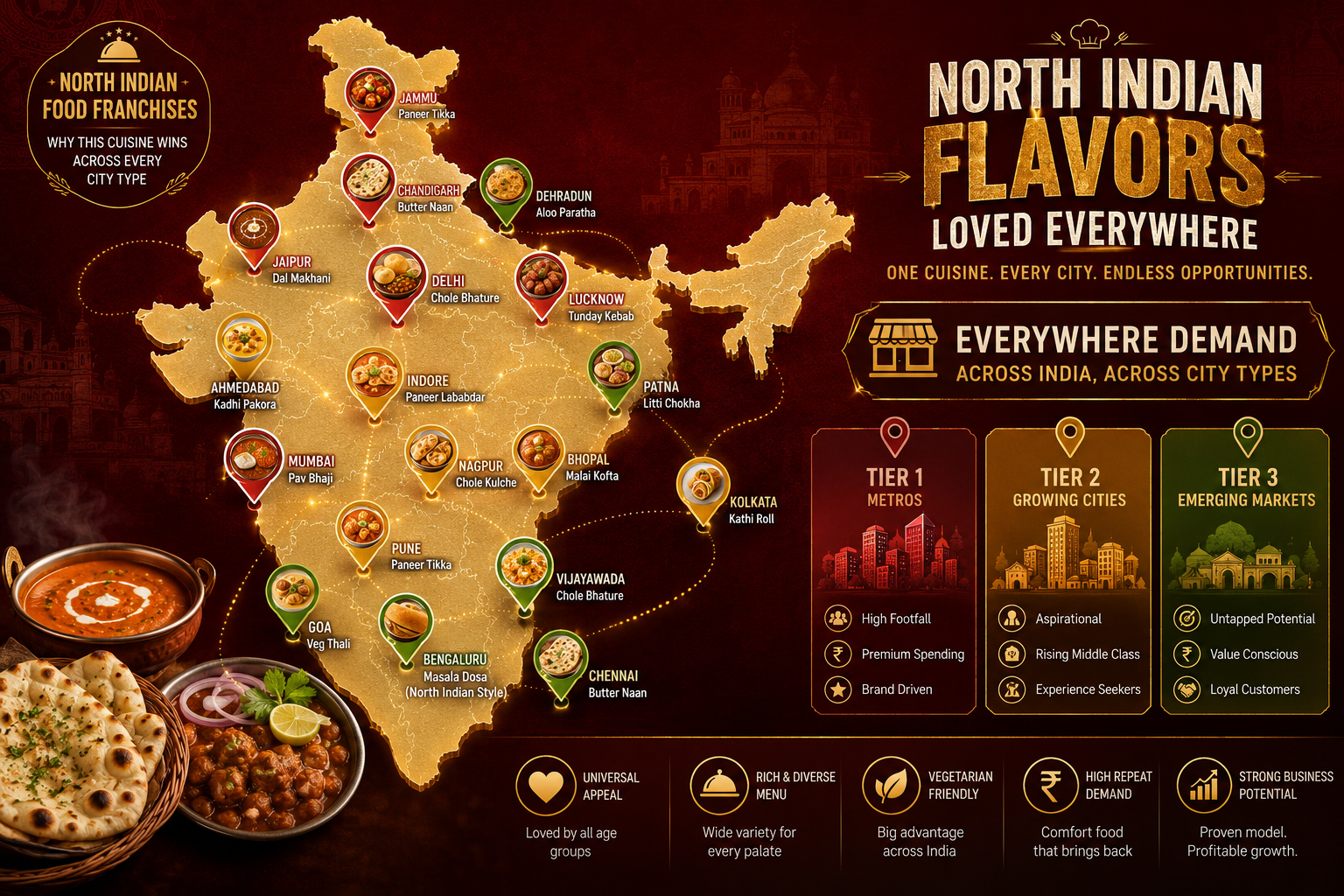
The success of North Indian Food Franchises: Why This Cuisine Wins Across Every City Type is rooted in its versatility. Whether it is a luxury dining experience in a Tier 1 city or a low investment food franchise in a Tier 3 town, the core menu remains relevant.
1. Tier 1 Cities: The Need for Speed and Quality
In metros like Delhi, Mumbai, and Bengaluru, the audience is time-starved but quality-conscious. Here, North Indian franchises succeed through the QSR (Quick Service Restaurant) model. Professionals looking for a filling lunch often choose a North Indian thali or a roll because it feels like a “proper meal” compared to burgers or sandwiches.
2. Tier 2 and Tier 3 Cities: The Aspirational Factor
In growing cities, dining out is a family event. North Indian cuisine, with its rich gravies and tandoori items, is seen as a celebratory meal. Aspiring business owners in these regions find that a pure veg food franchise focused on North Indian staples like Paneer Lababdar or Dal Tadka attracts large family crowds consistently.
3. High Scalability through Standardization
One of the biggest food franchise investment benefits is the removal of the “chef dependency.” Modern franchises like Chaat Ka Chaska use pre-set recipes and spice blends. This ensures that a Chole Bhature served in a chaat franchise in Noida tastes exactly the same as one served in Bhopal.
Why This Cuisine Outperforms Other Segments
North Indian food isn’t just a meal; it’s a category that covers every part of the day. You have heavy breakfasts (Parathas), quick snacks (Samosas and Chaat), hearty lunches (Thalis), and elaborate dinners.
| Feature | North Indian Franchises | International Fast Food |
|---|---|---|
| Occasion | Daily meals & Celebrations | Occasional snacking |
| Target Audience | All age groups (Kids to Seniors) | Mostly Gen Z and Millennials |
| Value for Money | High (Filling portions) | Moderate to Low |
| Ingredient Sourcing | Local and sustainable | Often depends on imported/specialty items |
For those buying a food franchise in India, the “all-day” nature of this cuisine means higher footfalls and better ROI.
The Role of Pure Vegetarian Options in Franchise Success
A significant portion of the Indian population prefers dining at “pure veg” outlets, especially during festivals or family outings. North Indian cuisine offers the most extensive and satisfying vegetarian menu in the world.
By investing in a vegetarian restaurant franchise, you immediately widen your customer base to include the most conservative and health-conscious diners. This is particularly effective in residential zones where families are the primary customers.
“In the Indian food market, trust is built through taste and tradition. North Indian franchises win because they offer a taste that consumers have loved for generations, backed by modern hygiene and service standards.”
Practical Steps to Start Your North Indian Food Journey
If you are an aspiring food entrepreneur, the path to a profitable food business involves more than just liking the food. You need a strategic approach:
- Analyze the Local Competition: Check what is missing in your specific area. Is it a lack of hygienic street food or the absence of a reliable family dining spot?
- Evaluate the Franchise Support: Does the brand provide training, marketing help, and supply chain support? Strong franchise support systems are the backbone of success.
- Location Selection: For North Indian QSRs, high-visibility areas like main markets or near office complexes work best. For casual dining, residential neighborhoods are ideal.
- Focus on “Chaat” for Quick ROI: Incorporating a chaat franchise element within your North Indian outlet can significantly boost evening sales, as street food is the most consumed snack category in India.
Conclusion
North Indian Food Franchises: Why This Cuisine Wins Across Every City Type is a reality driven by deep-rooted cultural habits and the evolving needs of the 2026 consumer. Whether you are looking for a low investment food franchise or a large-scale restaurant, this cuisine offers the safety of high demand and the excitement of rapid growth.
As India’s palate becomes more global, the craving for authentic, high-quality North Indian flavors only grows stronger. For the smart investor, this is the most reliable bridge to long-term success in the Indian F&B industry.
Ready to start your journey? Explore how a street food franchise India opportunity can help you build a profitable business in your city today.
References
- FICCI-KPMG, Indian Food Service Industry Report (2024)
- NRAI, India Food Services Report (2025)
- Ministry of Micro, Small and Medium Enterprises (MSME), Franchise Sector Growth Analysis (2023)
Tags: food franchise in India, North Indian cuisine, pure veg food franchise, low investment business, Chaat Ka Chaska, restaurant franchise opportunity, Indian street food, franchise investment 2026, food startup, QSR franchise India, profitable business ideas