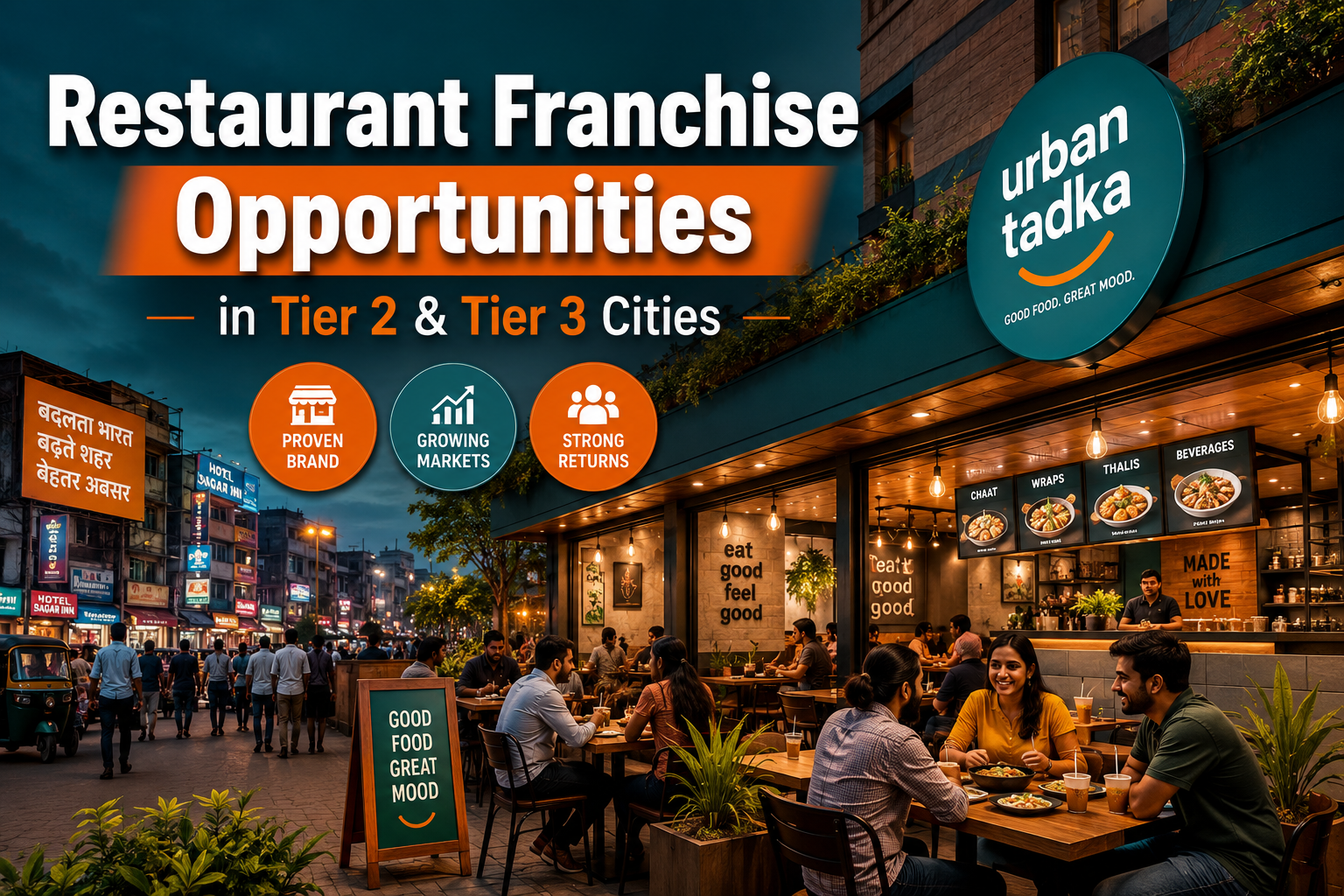
India’s consumption story is no longer limited to the crowded skylines of Mumbai, Delhi, or Bangalore. In 2026, the real economic engine is humming in cities like Indore, Lucknow, Nagpur, and Coimbatore. While Tier 1 markets grapple with high rentals and saturated competition, the smaller urban centers are witnessing a massive surge in disposable income and a hunger for branded dining experiences. For an entrepreneur, the search for Restaurant Franchise Opportunities in Tier 2 & Tier 3 Cities is the most strategic move to capture a loyal, growing customer base with significantly lower overhead costs.
Key Takeaways
- Tier 2 and Tier 3 cities offer lower operational costs and higher profit margins compared to metros.
- There is a massive demand for branded, hygienic, and pure veg food franchises in smaller towns.
- Reduced competition allows new franchise owners to establish market dominance quickly.
- The "Bharat" growth story is driven by improved infrastructure and rising middle-class aspirations.
Why the Shift to Tier 2 & Tier 3 Cities is Exploding in 2026
The landscape of the Indian food industry has shifted. People in smaller cities now have the same global aspirations as those in metros but often lack the same variety of high-quality dining options. This gap creates a golden window for buying a restaurant franchise in India.
Lower real estate costs are perhaps the biggest advantage. In a Tier 3 city, you can often secure a prime location for a fraction of the rent you would pay in a Tier 1 mall. When you combine low rent with a profitable food business model, your "break-even" point arrives much faster.
Furthermore, the "loyalty factor" in smaller towns is incredibly high. Once a brand establishes trust through taste and hygiene, it becomes the go-to spot for family outings, kitty parties, and evening snacks. This is why veg restaurant franchises in India are seeing such rapid expansion.
Benefits of Choosing Restaurant Franchise Opportunities in Tier 2 & Tier 3 Cities
Investing in a franchise in a smaller city isn't just about saving money; it’s about smart scaling. Here are the primary reasons why smart investors are looking toward "Bharat":
- Lower Operating Expenses (OPEX): From staff salaries to electricity and local marketing, everything costs less in Tier 2 and Tier 3 regions.
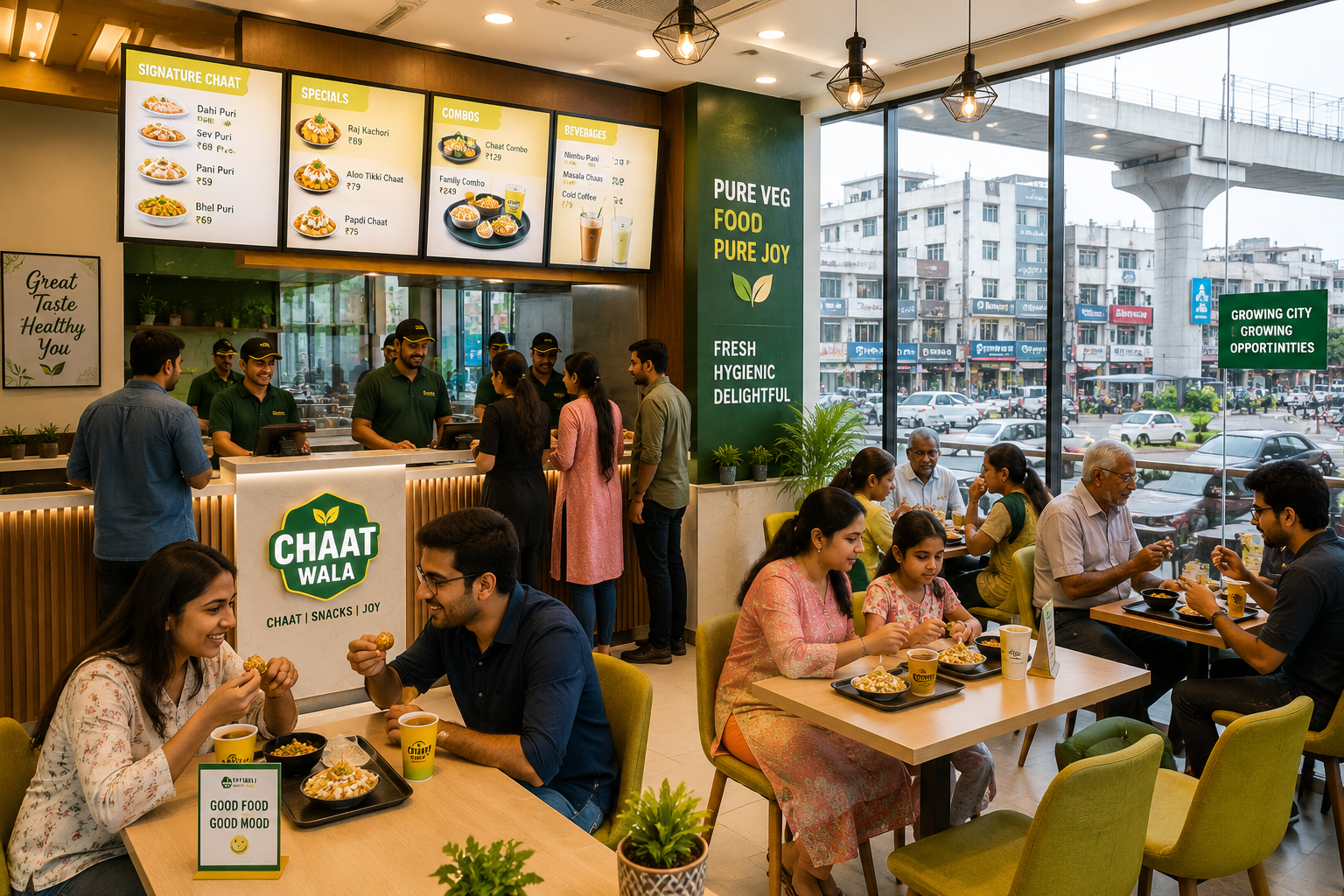
- Higher Visibility: In a smaller city, a well-branded outlet like a chaat franchise becomes a local landmark overnight.
- Ease of Staffing: Finding and retaining staff is often easier in smaller towns where employees are looking for stable, long-term opportunities close to home.
- Government Support: Many smaller cities are part of the "Smart Cities" mission, leading to better roads, consistent power, and improved business environments.
Comparing Costs: Tier 1 vs. Tier 2/3 (Estimated)
| Expense Category | Tier 1 City (Metro) | Tier 2/3 City | Potential Savings |
|---|---|---|---|
| Monthly Rent | High (Rs. 1.5L – 4L) | Low/Moderate (Rs. 30k – 80k) | 60-80% |
| Staff Wages | High | Moderate | 20-35% |
| Marketing | Expensive & Crowded | Targeted & Cost-Effective | 40% |
| Competition | Extremely High | Moderate to Low | N/A |
Choosing the Right Model: Why Pure Veg and Street Food Win
When exploring Restaurant Franchise Opportunities in Tier 2 & Tier 3 Cities, one must understand local palate preferences. A pure veg food franchise almost always outperforms others because it appeals to the entire family, from children to grandparents.
Street food, specifically, is the heartbeat of Indian dining. However, customers are now moving away from unhygienic roadside carts toward branded outlets. A street food franchise in India that offers the "Chaska" of local flavors with the "Cleanliness" of a corporate kitchen is a winning formula.
Whether you are looking at a low investment food franchise or a full-scale restaurant, the Quick Service Restaurant (QSR) model is highly effective. It allows for quick turnovers and handles high-volume evening rushes common in smaller city markets.
Steps to Start Your Franchise Journey in a Small Town
Starting a business can feel overwhelming, but the franchise route simplifies the process. If you are a first-time investor, follow these steps:
- Market Research: Identify which areas in your city have the highest footfall. Usually, this is near main markets, colleges, or coaching hubs.
- Budgeting: Determine your investment capacity. There are excellent restaurant franchises under 20 lakhs that provide high returns.
- Evaluate the Brand: Choose a partner that provides end-to-end support, including site selection, staff training, and raw material supply.
- Legal Compliance: Ensure you have the necessary FSSAI licenses and local municipal permissions. Using a restaurant franchise legal checklist can save you from future headaches.
"The growth of the Indian food industry in 2026 is being written in the lanes of small towns. The secret is simple: provide the quality of a metro at a price that fits the local pocket."
Overcoming Challenges in Smaller Markets
While the opportunities are vast, Tier 2 and Tier 3 cities come with their own set of challenges. Supply chain management is often the biggest hurdle. This is where partnering with an established food franchise in India becomes invaluable. A good franchisor already has a logistics network in place to ensure your kitchen never runs out of specialized ingredients.
Another factor is local taste customization. While the core menu remains the same, the way you market, perhaps through local WhatsApp groups or community events, can make a big difference. Professional restaurant franchise marketing helps you bridge this gap by blending national brand value with local cultural nuances.
Conclusion
The window for securing the best Restaurant Franchise Opportunities in Tier 2 & Tier 3 Cities is wide open in 2026. As infrastructure improves and consumer spending continues to climb, these cities represent the most stable and profitable frontier for the F&B industry. By choosing a high-demand niche like a vegetarian restaurant franchise and focusing on hygiene and taste, you can build a sustainable business that serves your community and your bank account equally well.
If you are ready to transition from a professional to a business owner, now is the time to act. Explore the available territories, understand the costs, and take the first step toward owning a piece of India’s booming food story.
Tags: food franchise, restaurant franchise, tier 2 cities, tier 3 cities, Indian food business, pure veg franchise, chaat franchise, franchise investment, street food India, food startup 2026, QSR franchise