The aroma of sizzling spices, the vibrant colours of street food, and the dream of owning a successful eatery often draw aspiring entrepreneurs into India’s dynamic food scene. But before you dive in, a critical decision looms: should you open a food franchise or an independent restaurant? This choice, particularly in 2026, can dramatically shape your journey. Understanding the nuances of “Food Franchise vs Independent Restaurant: Which Is Better in India?” is crucial for any young individual looking to make their mark in this competitive, yet incredibly rewarding, industry.
India’s food and beverage market is booming, driven by a young population, rising disposable incomes, and a growing appetite for diverse culinary experiences. For many, the allure of being their own boss is strong, but the path to success is rarely straightforward. This article will break down the pros and cons of both models, helping you decide which route offers the best chance for prosperity and growth in the exciting world of Indian food.
Key Takeaways
- Established vs. Original: Food franchises offer brand recognition and proven systems, while independent restaurants provide complete creative control and the chance to build a unique brand from scratch.
- Risk vs. Reward: Franchises generally come with lower risk due to established operations and support, but independent ventures can offer higher potential profits if successful, though with greater initial uncertainty.
- Support & Training: Franchises provide extensive training, marketing, and operational support, which is invaluable for first-time entrepreneurs. Independent owners bear all responsibilities and costs for these functions.
- Capital Investment: While a food franchise requires an initial franchise fee and adherence to brand standards, an independent restaurant often demands a larger upfront investment in concept development, branding, and marketing.
- Scalability: Franchises are often designed for multi-unit expansion, offering a clear path for growth, whereas scaling an independent restaurant requires significant effort to replicate its success.
Navigating the Indian Food Landscape: Food Franchise vs Independent Restaurant
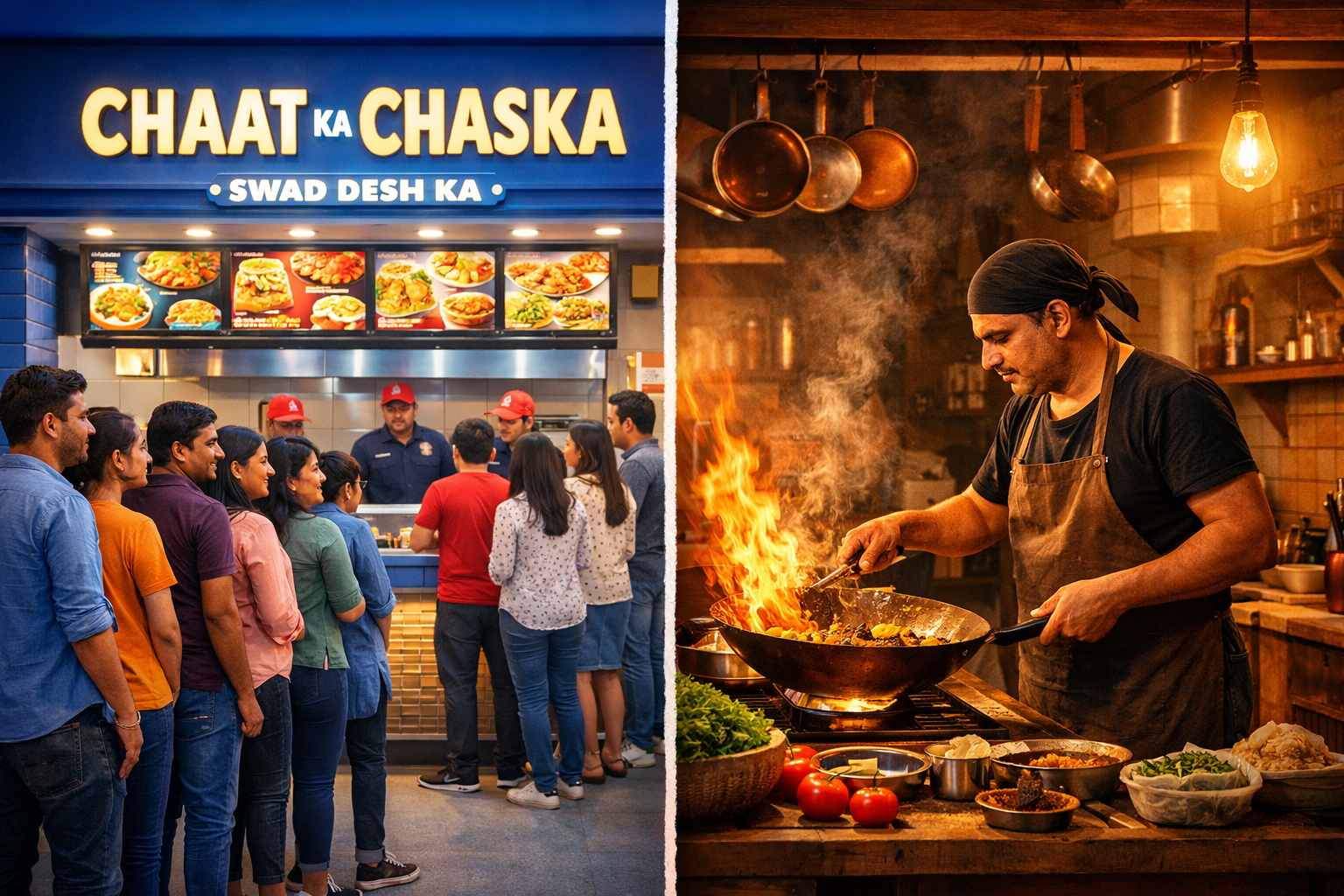 The Indian food industry is a tapestry of flavours, traditions, and business opportunities. From bustling street food stalls to high-end dining, there’s a segment for every entrepreneur. However, the fundamental choice remains: do you leverage the power of an established brand or forge your own path? Let’s delve into the core differences between a food franchise in India and an independent restaurant.
What is a Food Franchise?
A food franchise is essentially a business model where an individual (the franchisee) buys the right to operate a business using an established brand’s name, systems, and trademarks (the franchisor). Think of popular quick service restaurant (QSR) chains or renowned pure veg food franchise brands like Chaat Ka Chaska. When you buy a franchise, you’re not just buying a name; you’re buying a complete business blueprint.
- Examples: McDonald’s, Domino’s, Subway, and in the pure vegetarian street food space, Chaat Ka Chaska.
- Key Characteristic: Replication of a proven, successful model.
What is an Independent Restaurant?
An independent restaurant is a business entirely conceived, developed, and operated by its owner(s). Every aspect, from the menu and decor to the branding and marketing, is unique to that venture. It’s a blank canvas where creativity knows no bounds, but it also means carrying the full weight of every decision.
- Examples: A local café with a unique theme, a family-run regional cuisine eatery, a chef-owned fine dining restaurant.
- Key Characteristic: Originality, individuality, and complete creative freedom.
The question of “Food Franchise vs Independent Restaurant: Which Is Better in India?” often boils down to your personal goals, risk tolerance, and entrepreneurial style. Both offer distinct advantages and challenges in the vibrant Indian market.
Financial Investment and Risk: Food Franchise vs Independent Restaurant
When considering a food business, the financial outlay and associated risks are paramount. This is often where the distinction between a food franchise and an independent restaurant becomes most apparent, especially for those seeking a profitable food business in India.
The Franchise Advantage: Lowered Risk & Predictable Costs
One of the most compelling arguments for a food franchise in India is the reduced financial risk. While you pay an initial franchise fee and ongoing royalties, this investment buys you a proven business model.
- Established Brand: You don’t start from zero. A brand like Chaat Ka Chaska already has market recognition, a loyal customer base, and a reputation. This significantly reduces the marketing burden and time to profitability.
- Predictable Costs: Franchisors often provide detailed breakdowns of initial investment (including equipment, build-out, initial inventory) and operating costs. This helps in securing funding and managing budgets more effectively. Many low investment food franchise opportunities exist, making them accessible. For example, some pure veg food franchise models can start with a relatively modest investment.
- Supply Chain & Economies of Scale: Franchisors leverage their network to negotiate better prices on raw materials, equipment, and services. This translates to lower operational costs for franchisees.
- Marketing Support: A portion of your royalties often goes towards national or regional marketing campaigns, giving your outlet exposure you couldn’t afford independently. This is a huge benefit for a new food startup India.
However, franchises also come with ongoing costs like royalty fees, advertising fund contributions, and mandatory upgrades or renovations. For a deeper dive into these costs, explore “Veg Restaurant Franchise Cost in India” –
Independent Restaurant: Higher Stakes, Higher Potential Reward
Opening an independent restaurant is akin to launching a brand-new startup. The financial landscape is entirely different.
- Significant Upfront Capital: You’re responsible for everything – concept development, interior design, kitchen setup, initial marketing, legal fees, and more. This often requires a larger initial capital investment.
- Unpredictable Revenue: Without an established brand, customer acquisition can be slow and expensive. Your initial revenue will depend heavily on your unique selling proposition, marketing efforts, and positive word-of-mouth.
- Full Financial Responsibility: There are no shared marketing funds or bulk purchasing discounts. Every expense, every unforeseen challenge, falls squarely on your shoulders.
- Potentially Higher Profit Margins (if successful): If your independent restaurant thrives, you keep 100% of the profits (after expenses), without paying ongoing royalties or franchise fees. This is the big draw for many, as the ceiling for success can be higher without brand restrictions.
Table: Financial Comparison Overview
| Feature | Food Franchise (e.g., Chaat Ka Chaska) | Independent Restaurant |
|---|---|---|
| Initial Investment | Franchise fee, setup costs, initial inventory (often lower) | Concept development, full setup, branding, marketing (often higher) |
| Ongoing Costs | Royalties, advertising fees, operational costs, supply chain | Operational costs, independent marketing, supply chain |
| Brand Recognition | Immediate, strong | Zero, needs to be built from scratch |
| Marketing Support | Provided by franchisor | Entirely owner’s responsibility |
| Supply Chain | Centralized purchasing, bulk discounts | Independent sourcing, potentially higher costs |
| Risk Level | Lower due to proven model | Higher due to unknown market reception |
| Profit Potential | Steady, predictable, but share with franchisor | Potentially very high if successful, all profits kept |
Considering the “Food Franchise vs Independent Restaurant: Which Is Better in India?” from a financial perspective, a franchise often presents a more secure, albeit structured, path to profitability for aspiring entrepreneurs.
Operational Support and Training: The Franchise Advantage
One of the most significant benefits of opting for a food franchise in India, especially for those new to the restaurant business, is the comprehensive support system. This contrasts sharply with the solitary journey of an independent restaurateur.
Franchises: A Blueprint for Success
When you invest in a restaurant franchise opportunity, you’re not just getting a name; you’re getting a complete operational manual. This includes:
- Extensive Training: Franchisors provide in-depth training programs for franchisees and their staff. This covers everything from food preparation techniques and customer service standards to inventory management and POS system usage. For a brand like Chaat Ka Chaska, this means learning the exact recipes, presentation, and service protocols that have made it successful.
- Operational Systems: From kitchen layouts to order processing, franchises have standardized systems in place that are designed for efficiency and consistency. This minimizes trial and error and ensures a smooth workflow.
- Marketing and Branding: A robust marketing strategy is often provided by the franchisor, including national campaigns, local marketing kits, and social media guidance. This saves you significant time and money on brand building. For more insights on this, refer to “Restaurant Franchise Marketing“
- Ongoing Support: Franchisors typically offer continuous support, including field visits, performance reviews, and assistance with operational challenges. They have a vested interest in your success.
- Quality Control & Standards: Strict quality control ensures consistency across all outlets, which is vital for maintaining brand reputation and customer trust.
This level of structured support can be a game-changer for someone starting their first food business in India, offering a safety net and a clear roadmap.
Independent Restaurants: Learning by Doing
For the independent restaurateur, every aspect of operation, training, and support must be self-generated.
- DIY Training: You are solely responsible for hiring and training your staff. This requires expertise in various areas, from cooking skills to management.
- Developing Systems: Creating efficient operational systems from scratch can be a long and challenging process, often involving significant experimentation and adjustments.
- Building a Brand: Establishing your brand identity, marketing strategies, and customer base is entirely up to you. This demands substantial effort, creativity, and financial investment.
- Problem-Solving: When issues arise, you’re on your own. There’s no corporate helpline or experienced field representative to guide you.
- Maintaining Consistency: Ensuring consistent quality and service can be difficult without standardized protocols and ongoing training support.
While this path offers immense learning and the pride of building something truly unique, it also demands a higher level of personal expertise, resilience, and problem-solving skills. The comparison “Food Franchise vs Independent Restaurant: Which Is Better in India?” leans heavily towards the franchise model for those seeking robust operational assistance.
Creative Freedom vs. Brand Adherence
The heart of the “Food Franchise vs Independent Restaurant: Which Is Better in India?” debate often lies in the balance between creative freedom and brand adherence. This choice reflects a fundamental difference in entrepreneurial style.
Independent Restaurants: The Canvas for Creativity
If your passion is to innovate, experiment with unique recipes, design a specific ambiance, and create a brand that is purely your own, then an independent restaurant is your ideal playground.
- Unlimited Creativity: You have complete control over the menu, decor, pricing, marketing, and overall customer experience. Want to introduce a fusion chaat? Or a pure veg menu with a specific regional twist? Go for it!
- Unique Identity: This is where you carve out your niche in the market, build a distinct brand personality, and attract customers looking for something different.
- Adaptability: You can quickly adapt to changing customer preferences, local trends, or supply chain issues without needing approval from a corporate head office.
- Personal Expression: Your restaurant becomes an extension of your culinary vision and personal style.
However, this freedom comes with the responsibility of making all critical decisions, and every innovative idea carries the risk of not resonating with the market. Building a unique brand identity from the ground up requires significant effort and a clear vision.
Food Franchises: Structured Innovation and Proven Success
Joining a food franchise, such as a vegetarian restaurant franchise like Chaat Ka Chaska, means operating within established guidelines. While this might seem restrictive, it’s often the key to consistent success.
- Brand Guidelines: You must adhere to the franchisor’s established menu, recipes, pricing, branding, and operational procedures. This ensures consistency across all outlets, which is what customers expect from a recognized brand.
- Limited Menu Customization: While some flexibility might be allowed for local specials or seasonal items, major changes to the core menu are usually prohibited or require corporate approval.
- Pre-defined Aesthetics: The restaurant’s design, layout, and even uniforms are typically standardized to maintain brand consistency.
- Innovation within Limits: Any new ideas or improvements usually need to be proposed to the franchisor and, if approved, rolled out across the network.
While creative freedom is curtailed, this structure ensures a consistent customer experience and leverages the power of a unified brand. It’s a trade-off where personal innovation takes a back seat to proven market appeal and operational efficiency. For many, especially those looking for a quick service restaurant franchise, this structure is a welcome advantage. For more on the benefits, see “What are the Pros and Cons of Food Franchise in India?
Market Entry and Brand Recognition
Successfully entering the competitive Indian food market is a major challenge for any entrepreneur in 2026. The journey for a food franchise differs significantly from that of an independent restaurant, particularly concerning brand recognition and customer acquisition.
The Power of an Established Brand: Franchises
Opting for a food franchise in India means leveraging immediate brand recognition. This is a massive advantage in a crowded market.
- Instant Customer Trust: When you open a Chaat Ka Chaska outlet, customers already know what to expect in terms of quality, taste, and service. This built-in trust shortens the time to profitability.
- Pre-existing Customer Base: The franchisor’s national marketing and established reputation mean you inherit a ready-made customer base that is familiar with and loyal to the brand.
- Faster Market Penetration: New franchise locations often experience quicker traction compared to independent businesses that need to build their reputation from scratch. This is crucial for a new food startup in India.
- Reduced Marketing Spend: While you contribute to an advertising fund, you don’t have to spend heavily on initial brand awareness campaigns. The brand has already done the heavy lifting.
This immediate market acceptance allows franchisees to focus on operational excellence rather than the uphill battle of building a brand from scratch. For more on selecting the right opportunity, check out “Choose the Best Food Franchise for Your Budget in India” – .
Building from Zero: Independent Restaurants
For an independent restaurant, market entry is a much more arduous process, requiring significant effort in brand building and customer acquisition.
- No Brand Recognition: You start with zero brand equity. Customers have no prior knowledge or trust in your new establishment.
- Extensive Marketing Required: You’ll need to invest heavily in local marketing, social media presence, PR, and potentially promotions to attract your first customers and build buzz.
- Word-of-Mouth is Key: While crucial for all businesses, word-of-mouth becomes the primary driver for independent restaurants, which takes time to cultivate.
- Concept Validation: You need to prove your concept to the market. Will your unique menu or ambiance resonate? This requires careful market research and adaptability.
The journey of an independent restaurant is about creating a legacy, one customer at a time. While immensely rewarding if successful, it demands patience, strategic marketing, and a compelling unique selling proposition to stand out. When evaluating “Food Franchise vs Independent Restaurant: Which Is Better in India?” the speed and ease of market entry with a franchise are undeniable.
Long-Term Growth and Scalability
[The vision for the future of your business is a key factor in deciding “Food Franchise vs Independent Restaurant: Which Is Better in India?” Do you aspire to own multiple outlets, or are you content with a single, thriving establishment?Scalability with a Food Franchise
Franchise models are inherently designed for scalability. Many successful franchisees start with one unit and expand to multiple locations, creating a powerful business portfolio.
- Proven Expansion Model: The franchisor has already developed a blueprint for opening new units, including site selection, construction, and launch strategies. This makes multi-unit ownership a smoother process.
- Easier Financing: Lenders are often more willing to finance additional units of an established franchise brand due to its proven track record and lower risk profile.
- Operational Duplication: The standardized systems and training mean you can replicate your success more easily in new locations with consistent quality.
- Brand Support for Growth: Franchisors often provide support for multi-unit development, helping you identify new markets and scale your operations effectively. For those interested in expanding their portfolio, “Food Franchise Investment Benefits” – offers valuable insights. This makes a restaurant franchise opportunity an attractive option for growth-focused entrepreneurs.
Franchising offers a clear path for growth, allowing entrepreneurs to leverage the brand’s success and operational efficiency to expand their footprint.
Growth Challenges for Independent Restaurants
Scaling an independent restaurant, while possible, presents a different set of challenges and requires a significantly higher level of effort and investment.
- Replication Challenges: Duplicating the unique ambiance, service quality, and culinary consistency of a successful independent restaurant in a new location is incredibly difficult. You essentially have to start from scratch again.
- Brand Building for Each Unit: Each new location might require its own distinct marketing efforts to build a local following, even if it carries the same name.
- Financing Hurdles: Securing financing for a second or third independent restaurant can be more challenging, as lenders may perceive a higher risk without an established, scalable model.
- Increased Management Complexity: Managing multiple independent units demands a robust management structure and significant personal oversight, which can be taxing.
While some independent restaurants do successfully expand into chains, it’s a monumental undertaking that requires replicating a unique concept, building a strong management team, and significant capital. The path is less defined and often more arduous than growing within a franchise system. For aspiring entrepreneurs aiming for a multi-unit business, the food franchise route often provides a more structured and supported journey to long-term growth.
Which is Better in India: Food Franchise or Independent Restaurant?
After exploring the various facets of “Food Franchise vs Independent Restaurant: Which Is Better in India?”, it’s clear there’s no single “better” answer. The optimal choice depends entirely on your personal aspirations, financial situation, risk appetite, and entrepreneurial spirit.
When a Food Franchise is Better (Recommended)
For the young, aspiring entrepreneur in India, especially those entering the food industry for the first time, a food franchise often presents a more secure and guided path to success. We recommend seriously considering a food franchise.
- Reduced Risk: If you’re risk-averse or have limited experience, the proven business model, brand recognition, and operational support of a franchise can significantly increase your chances of success. It’s an excellent way to gain experience in a profitable food business with a safety net.
- Lower Barrier to Entry (in some cases): Many low investment food franchise opportunities exist, such as pure veg food franchise models, making business ownership more accessible.
- Faster ROI: With an established brand, customer acquisition is quicker, leading to potentially faster returns on investment.
- Comprehensive Support: From initial training to ongoing marketing and operational guidance, the support system of a franchisor is invaluable for new business owners.
- Scalability: If your long-term goal is to own multiple outlets, franchising provides a clear, supported pathway to achieve this. Chaat Ka Chaska, for instance, offers a streamlined process for multi-unit expansion.
If you’re looking for a structured business where you can follow a proven system and benefit from collective branding, a restaurant franchise opportunity is likely the superior choice. This is especially true in the competitive Indian street food business market, where brand loyalty can be a powerful asset. Consider exploring options like a chaat franchise, which can offer a vibrant and profitable entry point. For more practical advice on starting, see “Start Veg Restaurant or Buy Veg Restaurant Franchise in India” –
When an Independent Restaurant Might Be Considered
An independent restaurant is better suited for a specific type of entrepreneur:
- Creative Visionaries: If you have a truly unique culinary concept, a distinct brand vision, and a strong desire for complete creative control, an independent restaurant allows you to bring that vision to life without restrictions.
- Experienced Restaurateurs: Individuals with prior experience in F&B management, menu development, and marketing might have the expertise needed to navigate the challenges of an independent venture.
- High-Risk, High-Reward Mindset: If you are comfortable with higher financial risk for the potential of greater personal profit margins (without royalties) and the immense pride of building something entirely your own, then this path might appeal.
However, be prepared for significant upfront investment in time, money, and personal effort to establish your brand and attract customers.
Conclusion
The decision between a food franchise and an independent restaurant in India is a deeply personal one, weighing security and support against creative freedom and greater individual risk. In 2026, with the Indian food market continuing its robust growth, both paths offer significant opportunities for aspiring entrepreneurs.
For those seeking a more predictable journey, with the benefits of an established brand, proven operational systems, and comprehensive support, investing in a food franchise in India is often the more strategic choice. Brands like Chaat Ka Chaska exemplify how a pure veg food franchise or a street food franchise India can offer a profitable food business model, even with low investment food franchise options. This path minimizes initial risks and provides a clear roadmap for success and scalability, making it ideal for first-time franchise buyers and those aiming for a steady, growth-oriented business.
If you are an aspiring food entrepreneur looking to leverage the power of a recognized brand, benefit from extensive training, and become part of a successful network, exploring a restaurant franchise opportunity is highly recommended. It offers a robust framework to build a thriving business in India’s exciting culinary landscape.
Actionable Next Steps:
- Self-Assessment: Honestly evaluate your risk tolerance, financial capacity, experience level, and desire for creative control.
- Research Franchises: Explore reputable food franchise opportunities in India, especially those in segments you are passionate about, like the pure vegetarian or Indian street food business. Look into brands like Chaat Ka Chaska.
- Financial Planning: Understand the upfront investment and ongoing costs for both models. For franchises, thoroughly review the Franchise Disclosure Document (FDD).
- Network: Talk to existing franchisees and independent restaurant owners to gather real-world insights into their experiences.
- Seek Expert Advice: Consult with a business advisor or franchise consultant to help you make an informed decision tailored to your circumstances.
By carefully considering these factors, you can confidently choose the path that aligns best with your entrepreneurial dreams and sets you up for success in India’s vibrant food industry.