In the Indian F&B sector, nearly 60% of new independent restaurants fail within their first year, yet franchise models continue to see a much higher survival rate. If you are looking to enter the market in 2026, the big question isn’t just about survival; it is about speed. Many investors ask: is achieving a full return on investment (ROI) within a single year actually possible?
When discussing Franchise ROI in 12 Months: What’s Realistic for a Veg Food Franchise?, we have to look past the marketing fluff. While some high-investment brands take three to five years to recover capital, the low-investment, high-volume nature of the Indian street food sector offers a much faster path. For a focused entrepreneur, a 12-to-18-month window for ROI is a practical, achievable target in the current economy.
Key Takeaways
- Low Capex is King: Starting with a lean investment model significantly shortens the time needed to reach break-even.
- Operational Efficiency: Standardized recipes and supply chains reduce wastage, protecting your profit margins from day one.
- Location Strategy: High-footfall areas in Tier 2 and Tier 3 cities are currently offering faster ROI than saturated Tier 1 metros.
- The Veg Advantage: Pure vegetarian outlets enjoy a wider customer base and lower raw material costs compared to non-veg counterparts.
The Reality of Franchise ROI in 12 Months: What’s Realistic for a Veg Food Franchise?
To understand if a 12-month ROI is realistic, we must break down the financial math of a low investment food franchise. In a typical scenario, your total investment includes the franchise fee, equipment, interiors, and initial working capital.
For a street food model like a chaat franchise, the setup costs are relatively low. Because the menu relies on high-margin items like potatoes, chickpeas, and flour, the Cost of Goods Sold (COGS) stays between 30% and 35%. This leaves a healthy gross margin to cover rent, labor, and utilities.
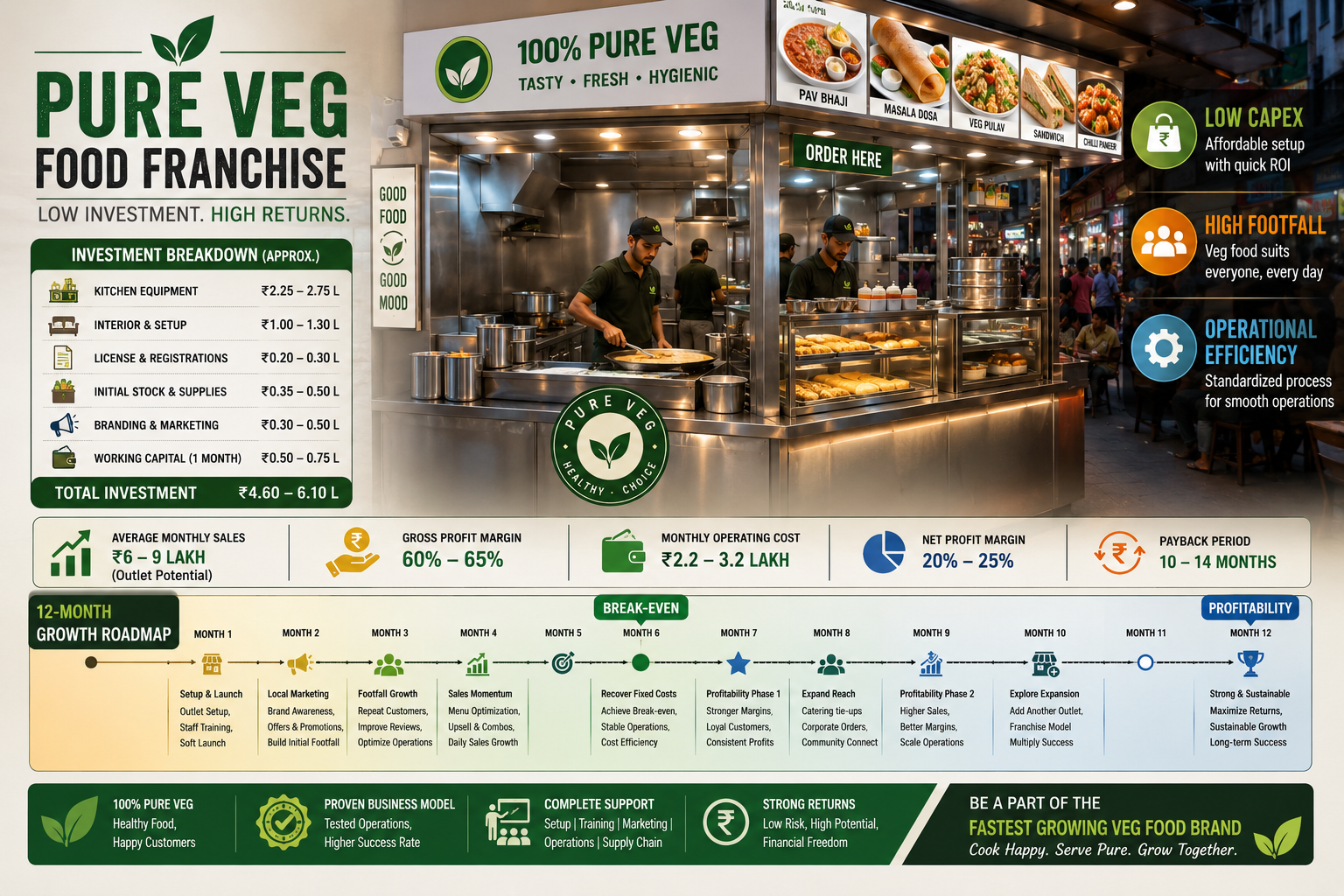
Breaking Down the Numbers
A realistic 12-month recovery plan usually follows this trajectory:
- Months 1-3: The “Gestation Period.” You are building local awareness. Profits might be slim as you fine-tune operations.
- Months 4-8: The “Growth Phase.” Word-of-mouth kicks in. If you have chosen a profitable food business model, you should see consistent month-on-month revenue growth.
- Months 9-12: The “Recovery Phase.” With stabilized costs and a loyal customer base, the net profits begin to rapidly pay back the initial capital.
Achieving Franchise ROI in 12 Months: What’s Realistic for a Veg Food Franchise? depends heavily on keeping fixed costs, like rent, under control. In 2026, many successful owners are opting for kiosk models in malls or small high-street shops to keep overheads low.
Why Pure Veg Models Recover Capital Faster
In India, the demand for a pure veg food franchise is evergreen. Unlike non-veg outlets that may see dips during religious periods or specific days of the week, vegetarian outlets maintain a steady flow of customers year-round. This consistency is the secret sauce for a fast ROI.
“Consistency in daily sales is more important for ROI than occasional high-revenue days. A veg franchise offers the stability needed to predict cash flows accurately.”
Furthermore, the restaurant franchise opportunity in the veg segment benefits from simpler kitchen operations. You don’t need separate storage areas or specialized handling for meat, which reduces both equipment costs and the risk of cross-contamination.
Factors That Speed Up Your ROI
- Brand Recognition: Joining a known name like Chaat Ka Chaska means you don’t spend months “explaining” your menu to customers.
- Tech Integration: Using modern POS systems to track inventory prevents “hidden leaks” in your budget.
- Delivery Partnerships: In 2026, a significant chunk of revenue comes from online platforms. A franchise that is already optimized for delivery can hit higher sales targets faster.
Common Pitfalls That Delay Profitability
Even with the best Indian street food business model, certain mistakes can push your ROI timeline from 12 months to 24 months. Identifying these early is crucial for any food startup in India.
| Pitfall | Impact on ROI | Solution |
|---|---|---|
| Over-staffing | High monthly burn rate | Follow the franchise’s recommended lean staffing guide. |
| High Rentals | Harder to reach break-even | Negotiate revenue-share models or choose smaller footprints. |
| Quality Inconsistency | Loss of repeat customers | Stick strictly to the provided brand SOPs and recipes. |
| Poor Marketing | Slow initial footfall | Leverage the brand’s national presence and do hyper-local ads. |
To avoid these traps, it is essential to understand the pros and cons of food franchise in India before signing the agreement.
Making the 12-Month Goal a Reality
To truly master Franchise ROI in 12 Months: What’s Realistic for a Veg Food Franchise?, you must act more like a manager and less like a passive investor. The most successful franchisees are those who engage with their local community and monitor their daily “Prime Cost” (Labor + Food Costs).
In 2026, the rise of veg food franchises in Tier 2 cities has proven that you don’t need a metro location to succeed. In fact, lower operational costs in these cities often lead to a faster ROI than in expensive markets like Mumbai or Delhi.
Actionable Steps for Investors:
- Audit the Location: Ensure the daily footfall matches the franchise’s success benchmarks.
- Focus on Upselling: Train staff to suggest add-ons like beverages or side snacks to increase the Average Order Value (AOV).
- Monitor Wastage: Every gram of wasted ingredients is a direct hit to your 12-month ROI goal.
Conclusion
Is achieving a full return on investment in 12 months realistic? For a high-capex fine-dining restaurant, the answer is usually no. However, for a pure veg food franchise focused on high-demand street food, it is a very achievable target. By combining a low initial investment with the operational support of a proven brand, you minimize risk and maximize the speed of recovery.
If you are ready to stop dreaming and start building, the vegetarian QSR space in India offers one of the most stable paths to profitability in 2026. Focus on efficiency, pick the right location, and follow the system. Your journey from investor to profitable business owner could be shorter than you think.
Next Steps:
- Research restaurant franchises under 20 lakhs to find a model that fits your budget.
- Evaluate your local market demand for organized street food.
- Contact the Chaat Ka Chaska team to see a detailed breakdown of projected earnings.
Tags: food franchise India, veg food franchise, franchise ROI, street food business, Chaat Ka Chaska, low investment franchise, QSR India 2026, profitable business ideas, restaurant ROI guide, Indian food startup