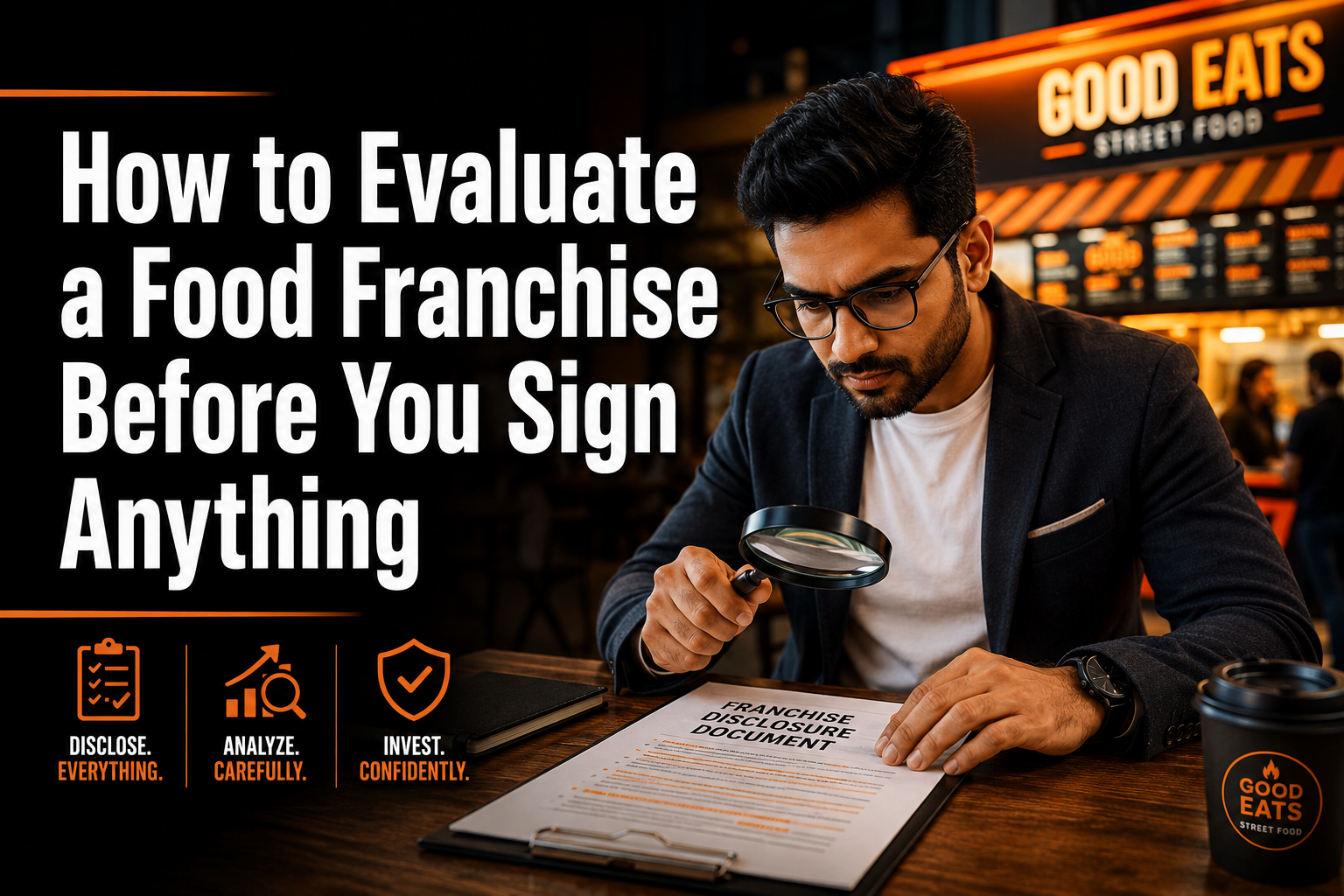
In India’s bustling 2026 economy, a new food franchise opens its doors every few hours, but nearly 30% of new F&B outlets struggle within their first two years due to poor initial vetting. While the dream of owning a successful restaurant is exciting, the difference between a high-growth asset and a financial drain lies entirely in your due diligence. You are not just buying a brand; you are buying a system, a supply chain, and a partnership.
Evaluating a food franchise is a multi-step process that goes far beyond tasting the menu. It requires a deep dive into the numbers, the legal framework, and the long-term scalability of the business model. This guide will walk you through the essential steps to ensure your investment leads to a profitable food business rather than a costly lesson.
Key Takeaways
- Analyze the Franchise Disclosure Document (FDD) to uncover hidden operational costs and royalty structures.
- Validate the brand’s market demand in your specific territory rather than relying on national popularity.
- Speak directly with existing franchisees to understand the reality of daily operations and franchisor support.
- Prioritize business models with high-profit margins, such as a pure veg food franchise, which often has lower procurement costs and wider mass appeal.
Analyze the Financial Health and Business Model
The first step in How to Evaluate a Food Franchise Before You Sign Anything is looking at the unit economics. A brand might have thousands of followers on Instagram, but that does not always translate to a healthy bottom line for the individual owner. You must distinguish between “brand revenue” and “franchisee profit.”
Ask the franchisor for a detailed breakdown of the initial investment. This should include the franchise fee, equipment costs, interior fit-outs, and initial inventory. However, the most critical numbers are the recurring ones. High royalties or mandatory expensive supply chain markups can quickly erode your margins.
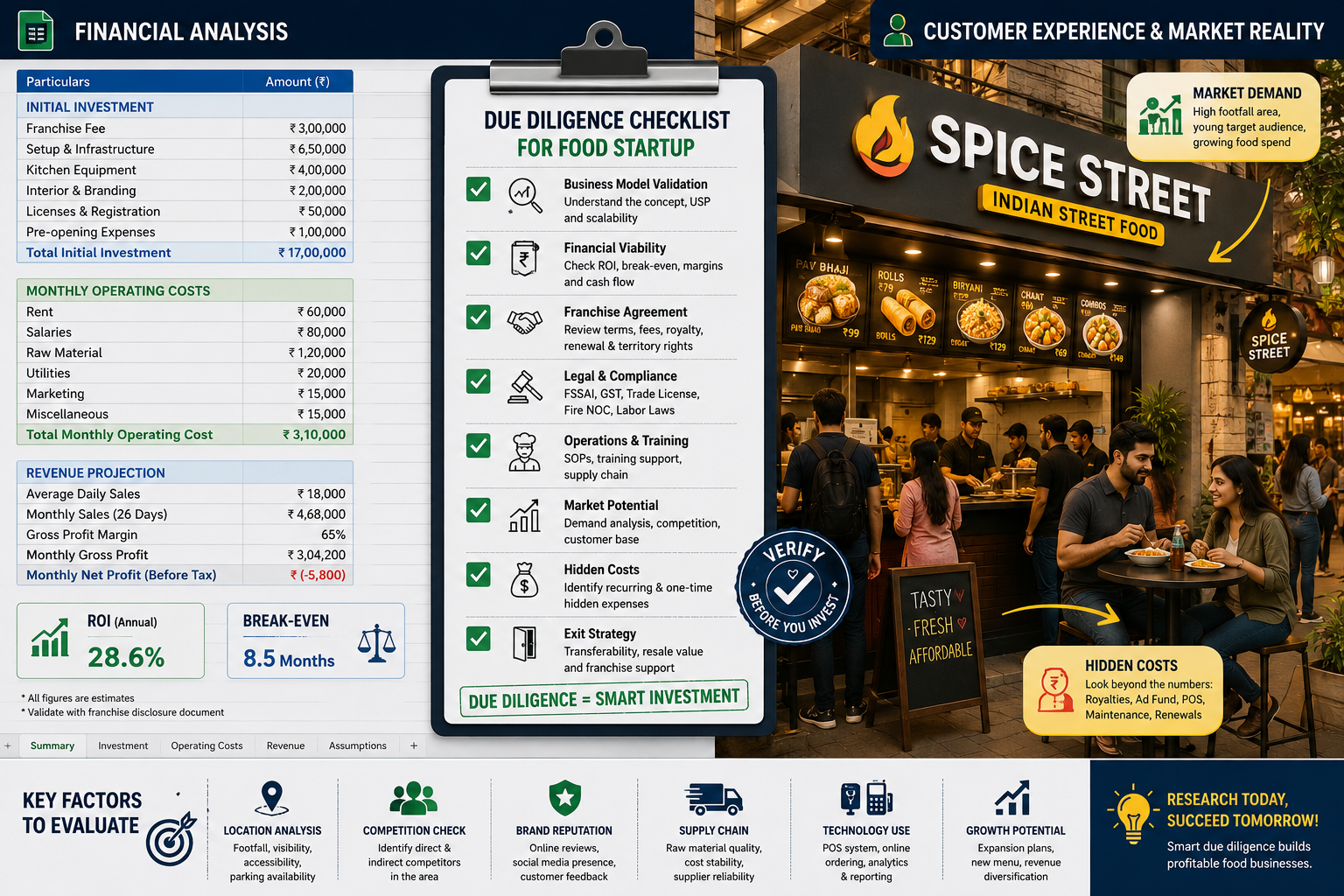
When assessing a low investment food franchise, pay close attention to the “Break-even Point.” A solid business model should allow you to recover your initial capital within 14 to 24 months. If the projected timeline is longer, the risk profile increases significantly.
Essential Financial Metrics to Check
| Metric | What to Look For | Why it Matters |
|---|---|---|
| Gross Margin | 60% to 70% for QSRs | Covers high labor and rent costs. |
| Royalty Fees | 4% to 8% of monthly sales | High fees must be justified by strong marketing support. |
| Marketing Fund | 1% to 3% | Ensures the brand remains visible in a crowded market. |
| COGS | Cost of Goods Sold | Lower COGS in a chaat franchise leads to higher net profit. |
Assess the Support System and Training
A major benefit of choosing a restaurant franchise opportunity over an independent brand is the “plug-and-play” nature of the business. However, some franchisors disappear the moment the check clears. You must evaluate the level of ongoing support you will receive.
Does the franchisor help with site selection and catchment area analysis? In a country as diverse as India, a location that works in South Delhi might fail in a Tier 2 city like Satna without proper local adjustments. Check if they provide comprehensive staff training, standardized recipes, and a robust POS (Point of Sale) system to track sales.
Effective franchise support systems are the backbone of success. Look for brands that offer:
- Operational Manuals: Step-by-step guides for everything from food prep to cleaning.
- Supply Chain Management: Consistent sourcing of high-quality ingredients.
- Marketing Collateral: Ready-to-use digital and offline promotional materials.
- Periodic Audits: Help in maintaining quality standards and identifying leaks in profit.
Evaluate the Legal Agreement and Exit Strategy
Knowing How to Evaluate a Food Franchise Before You Sign Anything involves a strict review of the legal contract. Franchise agreements are often weighted in favor of the franchisor, but they should still be fair.
Check the “Territory Rights” clause. You do not want another outlet of the same brand opening two blocks away from you six months later. Ensure you have an exclusive territory that protects your customer base. Additionally, look at the renewal terms. What happens after the initial 5-year or 9-year term ends? Are the renewal fees exorbitant?
Finally, always look for the exit strategy. Life circumstances change, and you may want to sell your business in the future. A good agreement allows for a “Transfer of Franchise,” giving you the right to sell the business to another qualified entrepreneur. Before signing, it is wise to consult a legal checklist for restaurant franchises to avoid common pitfalls.
“The best time to negotiate your exit is before you enter. Transparency in the legal contract is a hallmark of a trustworthy franchisor.”, Senior Franchise Consultant, 2026.
Understand Market Demand and Competition
A street food franchise in India is generally a safe bet because of the universal love for local flavors. However, you must still analyze the local competition. If there are already five pizza places on one street, opening a sixth might be risky.
In contrast, a pure veg food franchise that offers hygiene, consistency, and modern branding often finds a “blue ocean” in areas where traditional street vendors lack quality control. Evaluate if the brand’s menu has “staying power.” Is it a passing fad, or is it based on staple items that people eat weekly? Brands like Chaat Ka Chaska succeed because they take timeless Indian flavors and present them in a clean, professional QSR format that appeals to modern families.
Conclusion
Learning How to Evaluate a Food Franchise Before You Sign Anything is the most important skill you can develop as an F&B entrepreneur. By scrutinizing the financials, testing the support systems, and ensuring legal clarity, you move from being a hopeful investor to a strategic business owner.
The Indian food market in 2026 offers incredible growth, especially in the quick service restaurant franchise segment. Take your time, visit existing outlets, and ask the hard questions. A brand that is confident in its success will always be transparent with its data.
Next Steps for Aspiring Owners:
- Draft a Budget: Include a 20% buffer for working capital during the first six months.
- Visit Competitors: Eat at nearby outlets to understand their service gaps.
- Request the FDD: Start your deep dive into the brand’s history and litigation record.
- Connect with Experts: Reach out to established brands like Chaat Ka Chaska to see how their model fits your local market.
References
- Federation of Indian Chambers of Commerce & Industry (FICCI). (2024). Indian Food Services Report: Growth Drivers and Future Trends.
- National Restaurant Association of India (NRAI). (2025). The Impact of QSR Models on Tier 2 and Tier 3 Cities.
- Ministry of Commerce and Industry. (2023). Guidelines for Franchise Business Operations in India.
Tags: food franchise in India, franchise evaluation, street food franchise India, QSR franchise, franchise investment, food startup India, restaurant business guide, Chaat Ka Chaska, franchise agreement, pure veg food franchise