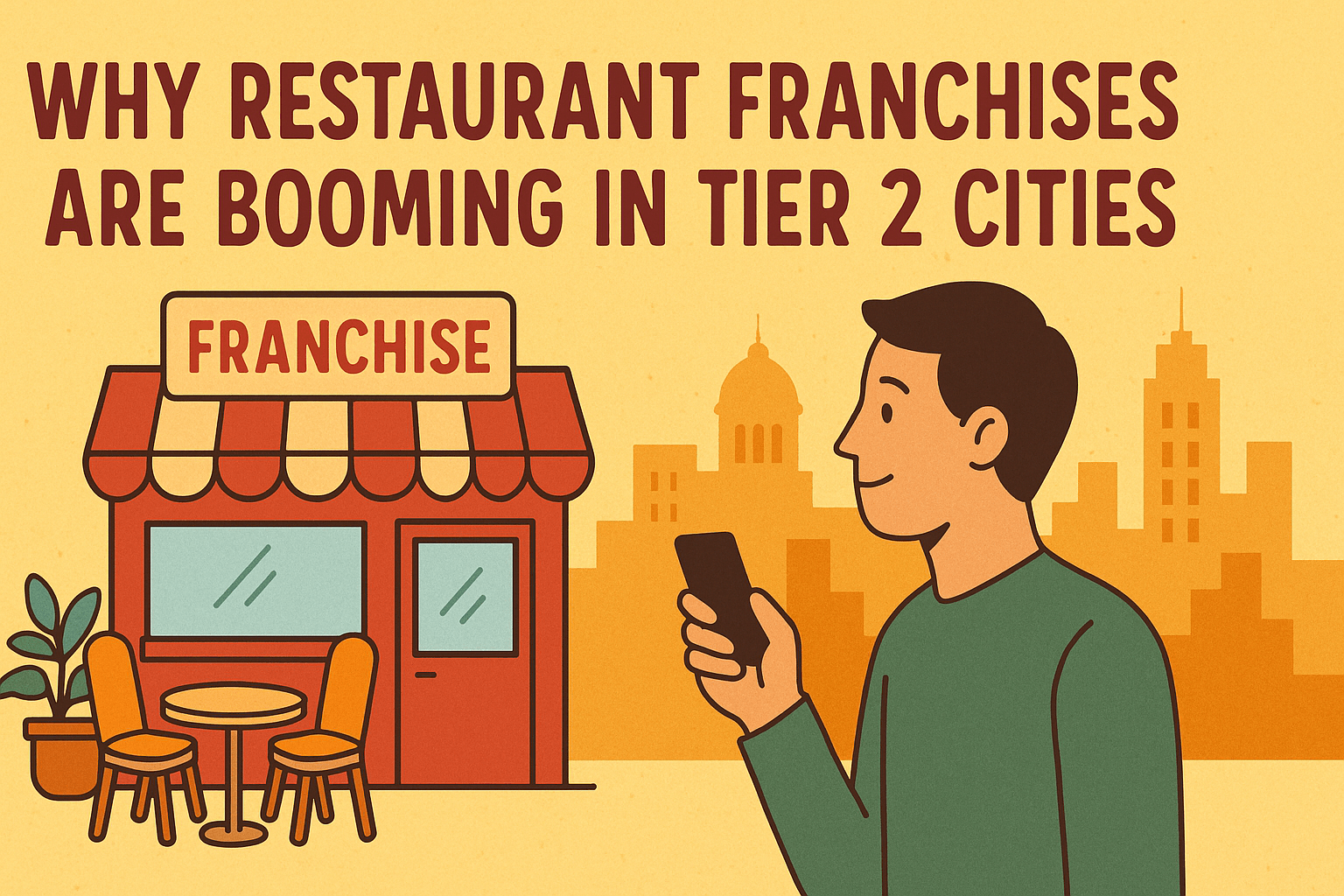
In the last decade, India has witnessed an unprecedented rise in consumerism beyond its metropolitan borders. The small-town charm of Tier 2 cities is now transforming into commercial hotbeds for various industries, and at the forefront of this boom lies the restaurant franchise sector. While metro cities continue to be saturated with eateries and food chains, the food franchise tier 2 cities trend is gaining momentum, presenting untapped potential for entrepreneurs, investors, and aspiring foodpreneurs. From Patna to Nagpur, and from Jaipur to Indore, the food culture is evolving rapidly. Locals are craving more diverse, hygienic, and brand-backed dining experiences.
The Emerging Appetite: What’s Driving Food Franchise Growth in Tier 2 Cities?
A Cultural Shift in Dining Preferences
The traditional image of Tier 2 cities as conservative food markets is quickly fading. Today, smaller towns are witnessing a dramatic change in lifestyle, aspirations, and spending habits. A significant rise in disposable income, exposure to social media trends, and the increasing number of nuclear families have led to a new wave of customers eager to explore branded culinary experiences. Unlike before, where eating out was a luxury, it has now become a routine weekend plan or even a weekday indulgence. This creates fertile ground for any food franchise in Tier 2 cities.
Add to this the growing young population – students, professionals, and millennials returning to their hometowns post-COVID, all of whom are not only seeking jobs but also entrepreneurial ventures. A restaurant franchise becomes an appealing option, offering ready-made business models, brand recognition, and operational support.
The Infrastructure Advantage in Tier 2 Cities
Affordable Real Estate and Lower Operational Costs
One of the major roadblocks for aspiring restaurateurs in metros is the exorbitant cost of real estate. Rental and utility costs in cities like Delhi, Mumbai, and Bangalore are prohibitively high, squeezing margins and increasing the risk factor. In contrast, Tier 2 cities offer affordable spaces in high-footfall areas like malls, markets, and highways.
This cost efficiency enables food franchises to operate on leaner budgets without compromising service or ambience. Lower wage rates, utility bills, and tax incentives from state governments further sweeten the deal, creating a win-win for franchisees and franchisors alike.
Rising Demand for Hygienic, Branded Food in Small Towns
Trust and Brand Recall Matter More Than Ever
Customers in smaller cities are increasingly gravitating toward hygienic, quality-controlled dining options. With rising health consciousness and food safety awareness, people are sceptical about local, unregulated eateries. Branded franchises, on the other hand, offer a trusted, standardised experience. This plays a huge role in influencing consumer choices in semi-urban areas.
Brands like Chaat Ka Chaska have capitalised on this trend by offering authentic Indian street food within a hygienic and family-friendly environment. Their success reflects a growing demand for familiar, homegrown cuisines that are packaged with professionalism. This combination of authenticity and cleanliness is a significant factor driving the food business in small towns.
Government Push Towards Tier 2 Development
Infrastructure Growth and Business Incentives
Various government initiatives like the Smart Cities Mission, Startup India, and UDAY (Urban Development for Aspirational Yields) are driving infrastructural and entrepreneurial development in smaller towns. These cities are seeing improvements in road connectivity, internet penetration, transportation, and commercial zoning – all essential for running a modern food franchise.
Incentives such as subsidies, relaxed compliance norms, and single-window clearances for setting up food outlets are making it easier for entrepreneurs to invest. With government support aligning with local demand, it’s no surprise that restaurant franchise growth in India is finding solid footing in Tier 2 landscapes.
Digital Penetration and the Rise of Food Delivery Apps
The Role of Technology in Scaling Local Demand
With smartphones in every pocket and digital payments becoming the norm, Tier 2 city consumers are now online foodies. Food delivery platforms like Zomato and Swiggy have rapidly expanded their reach, giving new visibility and revenue streams to local eateries and franchises.
This digital revolution is a game-changer for food franchises in Tier 2 cities. It means that a new outlet doesn’t just depend on physical footfall but also on app orders. Franchise brands that offer delivery-friendly menus, efficient packaging, and app-based marketing thrive faster and capture wider markets, sometimes even outperforming older local establishments.
Chaat Ka Chaska: The Perfect Franchise Model for Tier 2 Cities
How a Desi Concept is Dominating the Semi-Urban Market
If there’s one brand that epitomises the successful Tier 2 franchise model, it’s Chaat Ka Chaska. Their business philosophy combines the nostalgia of Indian street food with the efficiency and appeal of a professional setup. From crispy golgappas to spicy aloo tikkis, the menu appeals to a broad audience while ensuring consistent quality and hygiene.
Their low-investment franchise model, starting as low as ₹55–95 lakhs, is tailored for small-town entrepreneurs. With no royalty fees, training support, branding, marketing assistance, and a short breakeven period, Chaat Ka Chaska removes most barriers to entry for first-time investors. They even help franchisees with location scouting, staff hiring, and operations – a crucial factor for Tier 2 cities where skilled labour and food entrepreneurship are still growing.
Explore their franchise model here: 👉 Chaat Ka Chaska Franchise

Why Small-Town Entrepreneurs Are Choosing Franchises Over Independent Startups
Trust, Support & Scalability
Launching a new restaurant from scratch in a Tier 2 city may seem like a creative adventure, but it comes with immense risks. Branding, supply chains, vendor negotiations, staff training, recipe development, and marketing – all these elements can overwhelm a first-time owner.
This is why more small-town entrepreneurs are aligning with franchises. Established brands bring ready systems, recipes, equipment plans, and customer trust. Franchises help avoid common pitfalls, ensure uniform customer service, and offer marketing materials tailored to the locale. This kind of ecosystem support is especially valuable in Tier 2 cities where business mentorship and food industry exposure are still limited.
What the Numbers Say: Tier 2 Cities Are the Next Big Franchise Frontier
Data-Driven Growth
According to a report by the Franchise India Group, nearly 35% of all new food franchise inquiries in the past year have come from Tier 2 and Tier 3 cities. Cities like Lucknow, Bhopal, Kochi, Surat, and Coimbatore are leading the charts for new franchise outlets in 2024–2025.
With metro markets showing signs of saturation, Tier 2 cities offer fresh customers, reduced competition, and greater opportunities for market penetration. These trends signal long-term scalability for brands that are smart enough to adapt their models to semi-urban tastes.
FAQs:
1. Is it profitable to start a food franchise in Tier 2 cities?
Yes, Tier 2 cities offer high growth potential with low operating costs and increasing consumer demand. Brands like Chaat Ka Chaska have seen significant profitability due to their affordable models and broad menu appeal.
2. Which food franchises work best in small towns?
Indian cuisine franchises, street food models, quick-service restaurants (QSRs), and family-friendly casual dining setups do particularly well. Chaat-based concepts like Chaat Ka Chaska are ideal for capturing the Indian palate in smaller towns.
3. What is the investment needed to start a food franchise in Tier 2 cities?
It varies by brand and model. However, many brands offer low-investment models starting from ₹5–10 lakhs. Chaat Ka Chaska, for instance, offers franchise options that are budget-friendly and royalty-free.
4. Do food franchises offer training and marketing support?
Absolutely. Most reputed food franchises offer end-to-end support including location analysis, staff training, marketing, and operational guidance to ensure success, especially in Tier 2 cities.
5. Are food delivery apps active in Tier 2 cities?
Yes. Platforms like Zomato, Swiggy, and Dunzo are rapidly expanding in smaller towns, enhancing the visibility and reach of new food outlets.
Conclusion:
The restaurant industry in India is undergoing a strategic shift, and Tier 2 cities are the new battlegrounds for growth. As metros get crowded and cost-heavy, smaller towns are becoming hubs of culinary innovation, consumer spending, and business optimism. The fusion of digital growth, government incentives, cultural openness, and entrepreneurial enthusiasm is turning Tier 2 cities into the ideal environment for food franchises.
Brands like Chaat Ka Chaska have cracked the code – offering rooted Indian flavors with global-quality standards. For investors, franchisees, and food lovers, this is the perfect time to dive into the food franchise tier 2 cities wave. Whether you’re a passionate foodie or a savvy entrepreneur, the booming restaurant scene in small towns is your golden ticket to long-term success.