While many restaurant owners debate over menu items, the most successful investors know that “location is the first ingredient in a profitable recipe.” In 2026, the Indian food service market has shifted, and choosing where to plant your flag, be it a glitzy mall, a busy high street, or a buzzing food court, can change your return on investment by as much as 40%. Understanding How Chaat Ka Chaska Outlets Perform in Malls vs. High Streets vs. Food Courts is essential for anyone looking to enter the street food franchise India market with confidence.
Key Takeaways
- Malls offer high brand visibility and consistent weekend footfall but come with higher rentals and strict operating hours.
- High Streets provide the best long-term profitability due to lower overheads and late-night customer access.
- Food Courts deliver the highest “impulse buy” conversions, making them ideal for quick-service chaat items.
- Chaat Ka Chaska models are flexible, allowing entrepreneurs to adapt their investment based on the specific location’s strengths.
How Chaat Ka Chaska Outlets Perform in Malls vs. High Streets vs. Food Courts
The performance of a chaat franchise isn’t just about the taste of the Pani Puri; it is about matching the business model to the environment. Each location type attracts a different kind of “hunger.” A shopper in a mall has a different mindset than a commuter on a high street.
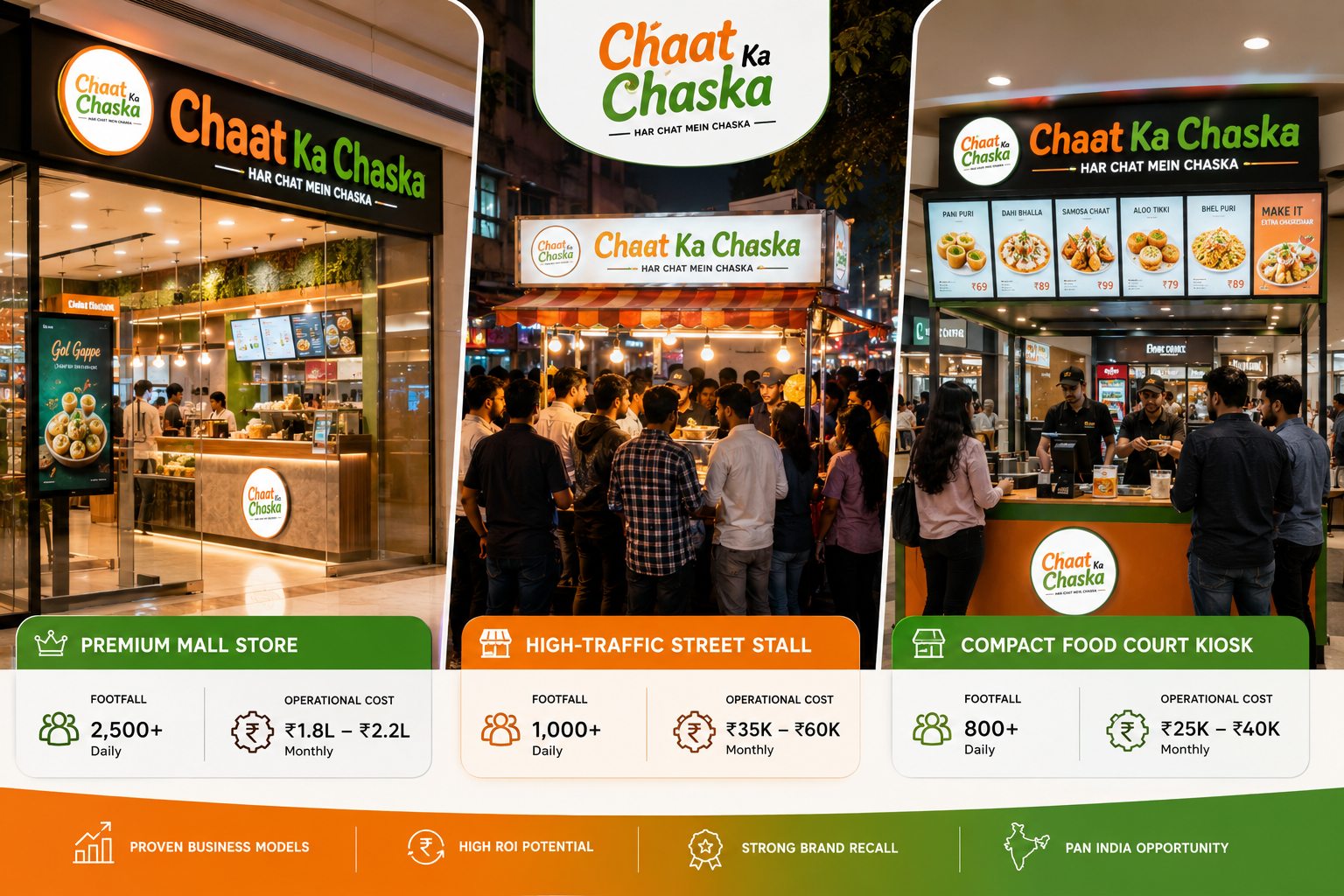
1. Performance in Shopping Malls
Malls are the temples of modern retail. For a pure veg food franchise, a mall location acts as a massive billboard.
- Customer Profile: Families, teenagers, and couples looking for a “clean” and “hygienic” street food experience.
- The Chaat Ka Chaska Advantage: Since our brand focuses heavily on hygiene and premium presentation, we fit perfectly into the upscale mall environment.
- Pros: High footfall during weekends and holidays; air-conditioned comfort encourages longer stays.
- Cons: Higher Common Area Maintenance (CAM) charges and fixed closing times.
2. Performance on High Streets
High streets are the traditional heart of Indian commerce. Whether it is a busy market in Delhi or a popular lane in a Tier-2 city, street food business thrives here because it is where people naturally gather.
- Customer Profile: Local residents, office goers, and daily shoppers.
- The Chaat Ka Chaska Advantage: On a high street, the brand benefits from “repeat loyalty.” People stop by for their evening snack every single day. This makes it a very profitable food business.
- Pros: Lower rent compared to malls, freedom of operating hours, and direct visibility to passing traffic.
- Cons: Management of outdoor cleanliness and dependence on weather conditions.
3. Performance in Food Courts
Food courts are high-velocity environments. Here, the competition is side-by-side.
- Customer Profile: High-intent diners who are already hungry and looking for variety.
- The Chaat Ka Chaska Advantage: Chaat is often an “add-on” or a starter. While someone might buy a heavy meal from another stall, they will almost always stop at a quick service restaurant franchise like ours for a plate of Sev Puri or Dahi Bhalla to share.
- Pros: Shared seating area (no need to manage your own tables) and a constant stream of hungry customers.
- Cons: High competition and a percentage of revenue often goes to the food court management.
Comparing the Three Models: At a Glance
To help you decide where your franchise investment India should go, here is a simple breakdown of the metrics:
| Feature | Shopping Malls | High Streets | Food Courts |
|---|---|---|---|
| Footfall Type | Leisure / Window Shoppers | Goal-Oriented / Commuters | High-Intent Diners |
| Peak Hours | Weekends & Evenings | Evenings & Late Night | Lunch & Dinner Hours |
| Operational Cost | High | Moderate | Moderate to High |
| Brand Presence | Premium & High Visibility | Local Powerhouse | Fast-Paced Competition |
| Average Ticket Size | High | Moderate | Moderate |
Why Chaat Ka Chaska Thrives Across All Formats
The reason How Chaat Ka Chaska Outlets Perform in Malls vs. High Streets vs. Food Courts shows positive results across the board is our standardized SOPs (Standard Operating Procedures). Whether you are in a 200 sq. ft. kiosk in a Tier-2 city food franchise or a 1,000 sq. ft. high street outlet, the taste remains consistent.
For a low investment food franchise, we provide the flexibility to choose a “Kiosk Model” for food courts or a “Cafe Model” for high streets. This adaptability ensures that the entrepreneur can match their budget to the most suitable location.
“The beauty of the Indian street food business is its universal appeal. Everyone from a college student to a corporate CEO loves chaat. The location simply determines how you serve that craving.”
Making the Right Choice for Your Food Startup
When evaluating How Chaat Ka Chaska Outlets Perform in Malls vs. High Streets vs. Food Courts, ask yourself these three questions:
- What is my total budget? If you have a lower budget, a high street or a small kiosk in a local market is a great way to start a food startup India.
- How much time can I dedicate? Malls require strict adherence to timing, whereas high streets offer more flexibility for owner-operators.
- What is the local competition? Look for “white spaces”, areas where people want clean, tasty chaat but can’t find a reliable vegetarian restaurant franchise.
Conclusion
Success in the restaurant franchise opportunity world in 2026 depends on strategy, not just luck. While malls offer glamour and high-spending crowds, high streets offer stability and lower costs. Food courts, on the other hand, provide sheer volume.
At Chaat Ka Chaska, we help our partners analyze their local geography to find the “sweet spot” for their outlet. No matter which location you choose, the demand for hygienic, flavorful, and authentic Indian street food is only growing.
Ready to start your journey? Explore our best food franchise in India opportunities today and take the first step toward becoming a successful food entrepreneur.